Let’s be real for a moment. Nobody enjoys that feeling of a stuffy, sticky room in the middle of July, nor do they enjoy the shocking electricity bill that follows a month of blasting a traditional AC unit. This is where a proper Inverter Air Conditioner Review becomes more than just a search query—it’s a quest for comfort and savings. If you’ve ever wondered why some air conditioners seem to hum along quietly while keeping the temperature perfect, and others cycle on and off like a freight train, you’ve come to the right place. We’re about to dive deep into the world of inverter technology and figure out if it’s the game-changer your home needs.
For those looking to explore specific eco-conscious models, our comprehensive [eco friendly air conditioner review](https://airconditionerguru.com/eco-friendly-air-conditioner-review/) offers detailed insights into units that are both powerful and kind to the planet.
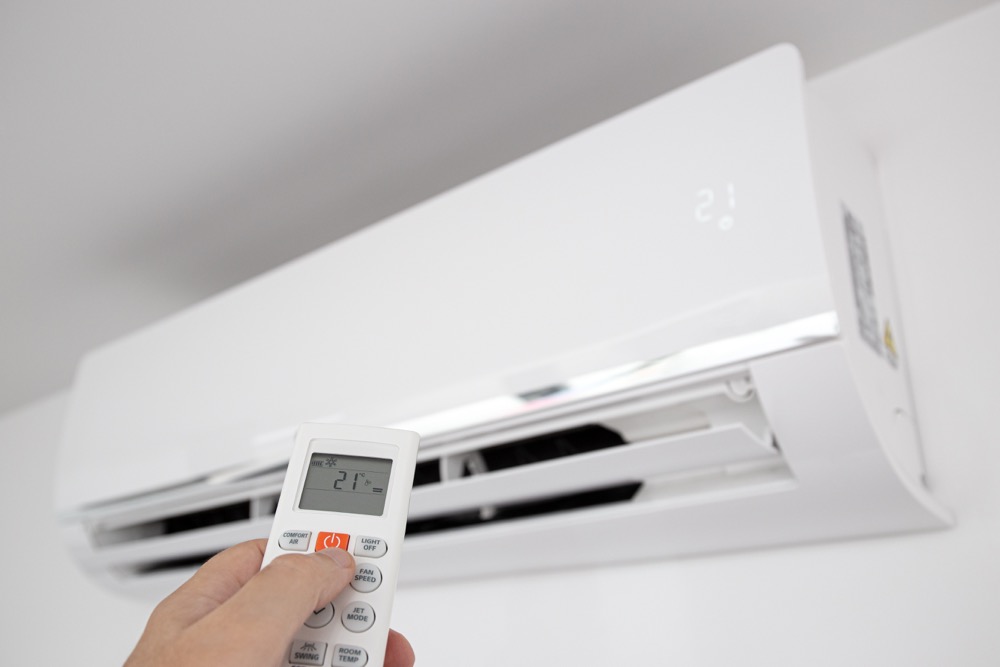
What is an Inverter Air Conditioner, Anyway?
An inverter air conditioner is a smart AC unit that adjusts its compressor motor speed to control the flow of refrigerant, allowing it to precisely manage room temperature. Unlike traditional units that turn the compressor on at full blast and then shut it off completely, an inverter AC runs continuously at a variable speed.
Think of it like driving a car. A non-inverter AC is like driving in heavy city traffic—all stop-and-go. You’re either flooring the gas or slamming on the brakes. An inverter AC, on the other hand, is like using cruise control on the highway. It makes small, constant adjustments to maintain a steady speed, using far less fuel and providing a much smoother ride.
How Does Inverter Technology Actually Work?
It might sound complex, but the principle is beautifully simple. The “inverter” is a circuit that controls the power supplied to the compressor motor, allowing it to run at different speeds. Here’s a step-by-step breakdown of what happens:
- You Set the Temperature: You pick your ideal temperature, say 72°F, on the remote.
- Initial Power-Up: The inverter AC starts up and runs the compressor at high speed to cool the room down as quickly as possible.
- The “Cruise Control” Phase: As the room temperature gets close to your set point, the inverter circuit signals the compressor to slow down. It doesn’t shut off.
- Constant Monitoring: The unit continuously monitors the room temperature and makes tiny, real-time adjustments to the compressor’s speed. If someone opens a door and lets in warm air, it will speed up slightly. If the sun goes down, it will slow down even more.
The result? A perfectly consistent temperature without the jarring on-and-off cycles and energy spikes of older models.
|
Our Picks for the Best Air Conditioner in 2026
As an Amazon Associate, we earn from qualifying purchases.
|
||
| Num | Product | Action |
|---|---|---|
| 1 | Amazon Basics 5000-BTU Small Window Air Conditioner, Up to 150 Sqf, Window AC Units with Cool and Fan Functions, Washable Filter, Adjustable Window Kit, Intuitive Mechanical Controls, White |

|
| 2 | BLACK+DECKER Smart Portable Air Conditioner, 14,000 BTU (10,200 BTU SACC) for Rooms up to 700 Sq. Ft., Smart Portable AC with Follow Me Remote and Window Kit, BPACT14WT, White |
|
| 3 | Dreo - Tower Fan for Bedroom - 25ft/s Velocity - Quiet Standing Fan - 4 Speeds/4 Modes/8H Timer - 90° Oscillating Fan for Indoors - 36 inch Floor Fans with Remote - Bladeless Fans Black - Nomad One |
|
| 4 | Comfort Zone Box Fan with Carry Handle, 20 inch, 3 Speed Full-Force Air Circulation with Air Conditioner, Floor Fan, Bedroom Fan, Airflow 15.03 ft/sec, Ideal for Home, Bedroom & Office, CZ200ABK |
|
| 5 | Portable Air Conditioners,10,000 BTU 3-in-1 Portable AC unit for Rooms up to 450 Sq. Ft, Featuring 24H Timer, Smart Sleep Mode, Window Kits Included, Perfect for Bedrooms, Kitchens, and Apartments. |
|
| 6 | Dreo Portable Air Conditioners, 12,000 BTU AC Unit for Bedroom with Drainage-free Cooling, 46dB Quiet, APP/Voice/Remote, 24h Timer with Fan & Dehumidifier, Smart Standing AC for Room Indoors, AC515S |
|
| 7 | Portable Air Conditioners,10,000 BTU 3-in-1 Portable AC unit for Rooms up to 450 Sq. Ft, Featuring 24H Timer, Smart Sleep Mode, Window Kits Included, Perfect for Bedrooms, Kitchens, and Apartments |
|
| 8 | Evaporative Air Cooler, 3-IN-1 Portable Air Conditioners, Swamp Cooler, 3 Speeds & 4 Modes, 2-Gal Water Tank for Cooling, 16 FT/S Remote Control, Windowless Air Conditioner for Indoors Use |
|
| 9 | LG 7,500 BTU Window Air Conditioner with Supplemental Heat, Cools 320 Sq.Ft. (16\\\\\\\' x 20\\\\\\\' Room Size), Electronic Controls with Remote, 2 Cooling, Heating & Fan Speeds, Slide In-Out Chassis, 115V |
|
| 10 | Evaporative Air Cooler, 3-IN-1 Portable Air Conditioners, Swamp Cooler, 3 Speeds & 4 Modes, 2-Gal Water Tank for Cooling, 16 FT/S Remote Control, Windowless Air Conditioner for Indoors Use |
|
The Real-World Benefits: Why Should You Care?
Okay, the technology is cool, but what does it actually mean for you and your home? The benefits are pretty significant.
- Serious Energy Savings: This is the big one. By avoiding the constant starts and stops, inverter ACs can be 30-50% more energy-efficient than their non-inverter counterparts. This translates directly to lower monthly electricity bills.
- Unwavering Comfort: Say goodbye to those annoying temperature swings. Because the unit is always running and making micro-adjustments, the temperature in your room stays remarkably stable, eliminating hot and cold spots.
- Whisper-Quiet Operation: The noisy part of an AC cycle is the compressor kicking on. Since an inverter compressor runs continuously at a low speed, it’s significantly quieter. This is a dream come true for light sleepers who need an AC in the bedroom.
- Longer Lifespan: The stop-start process puts a lot of strain on a compressor’s motor. By running smoothly and consistently, an inverter AC’s compressor experiences less wear and tear, which can lead to a longer operational life for the entire unit.
Inverter vs. Non-Inverter: A Head-to-Head Showdown
To make it crystal clear, here’s a simple table comparing the two technologies:
| Feature | Inverter AC | Non-Inverter AC |
|---|---|---|
| Compressor Speed | Variable, adjusts as needed | Fixed, either ON (full power) or OFF |
| Energy Efficiency | High (lower electricity bills) | Standard (higher electricity bills) |
| Temperature Control | Very precise, minimal fluctuations | Noticeable temperature swings |
| Noise Level | Very quiet, especially at low speeds | Louder, with distinct on/off cycles |
| Initial Cost | Generally higher | Generally lower |
| Unit Lifespan | Potentially longer due to less stress | Standard lifespan |
Our In-Depth Inverter Air Conditioner Review Factors
When you’re ready to buy, you can’t just pick the first model you see. Here are the critical factors we at Air Conditioner Guru always consider in our reviews.
How Do I Choose the Right Size Inverter AC?
Choosing the right size, measured in British Thermal Units (BTUs), is the single most important decision. A unit that’s too small will run constantly and never cool the room, while a unit that’s too big will cool the room too quickly without properly dehumidifying it, leaving you with a cold, clammy feeling.
Here’s a quick reference guide:
- Small Rooms (150-350 sq. ft.): 5,000 – 8,000 BTU
- Medium Rooms (350-550 sq. ft.): 8,000 – 12,000 BTU
- Large Rooms (550-1,000 sq. ft.): 12,000 – 18,000 BTU
Expert Tip from John Carter, a certified HVAC technician with 15 years in the field: “Always factor in your environment. If the room gets a lot of direct sunlight or has high ceilings, you might want to increase the BTU rating by about 10%. Don’t just go by square footage alone.”
What Do AC Efficiency Ratings Mean?
You’ll see a lot of acronyms on the box, but two are key: SEER and EER.
- SEER (Seasonal Energy Efficiency Ratio): This measures how efficiently the air conditioner cools over an entire season. The higher the SEER rating, the more efficient it is. Look for units with a SEER rating of 15 or higher.
- EER (Energy Efficiency Ratio): This measures efficiency at a specific outdoor temperature (usually 95°F). It’s a good snapshot of performance on a very hot day.
- ENERGY STAR: Always look for the blue ENERGY STAR label. This is a U.S. government-backed symbol for energy efficiency, meaning the product meets strict standards set by the EPA.
Proper installation is key, regardless of the model you choose. This is particularly true for specific designs, and you can learn more about the nuances in our detailed [window air conditioner review 2025](https://airconditionerguru.com/window-air-conditioner-review-2025/) which covers models that often require a precise fit.
What Smart Features Should I Look For?
Modern inverter air conditioners come loaded with features that can make your life easier. Here are a few to look for:
- Wi-Fi Connectivity: Control your AC from your smartphone, whether you’re on the couch or on your way home from work.
- Voice Control: Compatibility with assistants like Amazon Alexa or Google Assistant for hands-free operation.
- Sleep Mode: Gradually adjusts the temperature throughout the night for optimal comfort and energy savings.
- Auto-Restart: Automatically powers the unit back on with its previous settings after a power outage.
Common Inverter AC Issues and Quick Fixes
Even the best units can have hiccups. Here are a few common problems and what to do about them.
- Not Cooling Enough: Check the air filter first! A clogged filter is the #1 cause of poor performance. Clean or replace it every month.
- Water Leaking Inside: The condensate drain line might be clogged. You can often clear a minor clog yourself with a stiff wire or a wet/dry vac.
- Unit Won’t Turn On: Check the circuit breaker and make sure the plug is securely in the outlet. Sometimes it’s the simplest things.
- Strange Noises: While inverters are quiet, a sudden grinding or rattling noise could indicate a problem with the fan or motor. It’s best to turn it off and call a professional.
Frequently Asked Questions (FAQs)
Is an inverter air conditioner worth the extra cost?
Absolutely. While the initial purchase price is higher, the significant energy savings on your monthly bills mean the unit often pays for the price difference over its lifetime. The added comfort and quiet operation are huge bonuses.
How much can I really save with an inverter AC?
Savings can range from 30% to 50% on your cooling costs compared to a similar-sized non-inverter model. The exact amount depends on your climate, electricity rates, and how often you use it.
Do inverter air conditioners take longer to cool a room?
No, it’s the opposite. Most inverter units are designed to run at maximum capacity when first turned on to cool the room down faster than a traditional AC. Once the desired temperature is reached, they throttle down to maintain it.
Can I leave my inverter AC running all day?
Yes, and it’s actually more efficient to do so. Inverter ACs are designed to run continuously at low power. Letting it run all day at a moderate temperature is more efficient than turning it off and then blasting it on high to cool down a hot room.
What is the lifespan of an inverter air conditioner?
With proper maintenance, an inverter AC can last 10-15 years, and sometimes even longer. The reduced stress on the compressor compared to a non-inverter unit can contribute to a longer operational life.
The Bottom Line
After a thorough inverter Air Conditioner review, the verdict is clear: inverter technology is a massive leap forward in home cooling. It offers a superior combination of energy efficiency, consistent comfort, and quiet performance that non-inverter models simply can’t match. While the upfront investment is a bit higher, the long-term savings and drastically improved quality of life make it a smart and worthwhile choice for almost any homeowner.
Have you made the switch to an inverter AC? Share your experience or ask any lingering questions in the comments below! We’d love to hear from you.