Let’s be real for a moment. A sweltering office isn’t just uncomfortable; it’s a productivity killer. When your team is fanning themselves with folders and dreaming of ice baths, focus goes out the window. The decision to Buy AC For Office use is more than just a creature comfort—it’s a critical business investment. But navigating the world of commercial and office cooling can feel like stepping into a whole new universe compared to buying a unit for your home. Don’t sweat it, though. We’re here to break it all down, so you can make a cool, calculated decision that keeps your team happy and your business humming.
For those with smaller, dedicated spaces who might be exploring simpler solutions, understanding the nuances of various systems is key. A detailed look into different options, such as when to buy ductless air conditioner, can provide a broader perspective on modern cooling technology that might be applicable.
Why is Choosing an AC for an Office So Different?
You might be thinking, “An AC is an AC, right?” Well, not exactly. An office environment throws a few curveballs that your living room doesn’t. Ignoring these can lead to an underpowered unit, sky-high energy bills, and a still-uncomfortable team.
- Higher Heat Load: Think about it. You’ve got more bodies in one space, plus a fleet of computers, monitors, printers, and servers all generating their own heat. This “heat load” is significantly higher than in a typical home.
- Larger, Open Spaces: Many modern offices feature open-plan layouts, which are much harder to cool evenly than separate, smaller rooms.
- Variable Occupancy: The number of people in the office can fluctuate throughout the day, from a full house during a morning meeting to a skeleton crew after 5 PM.
- Air Quality Concerns: With more people sharing the same air, filtration and ventilation become much more important to maintain a healthy environment.
What Are the Best Types of AC Units for an Office?
The right choice depends heavily on your office’s size, layout, and budget. There’s no one-size-fits-all answer, but here are the main contenders you’ll be looking at.
Central HVAC Systems
This is the big kahuna of cooling. A central HVAC (Heating, Ventilation, and Air Conditioning) system uses a network of ducts to distribute cool air throughout the entire building.
- Best for: Large, multi-room offices or entire buildings where you own the property.
- Pros: Provides consistent, even cooling. It’s quiet and out of sight. Often integrates heating for a year-round solution.
- Cons: Very expensive to install if ducts aren’t already in place. Less flexible for “zoning” or cooling specific areas differently.
Ductless Mini-Split Systems
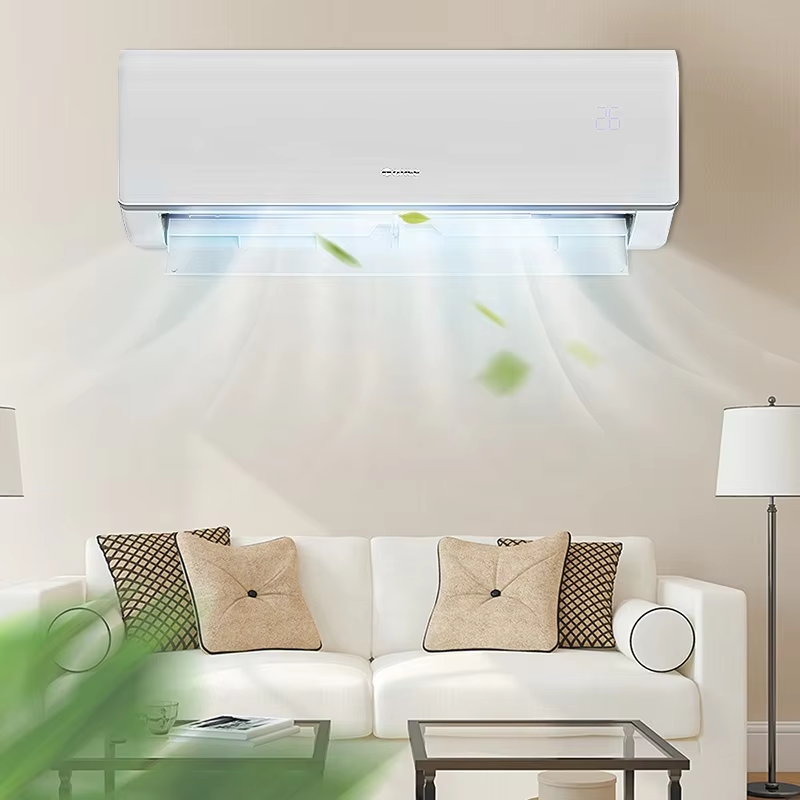
These are the rising stars of the cooling world for good reason. They consist of an outdoor compressor unit connected to one or more indoor air-handling units mounted on walls or ceilings.
- Best for: Offices that need flexible “zone cooling” (e.g., keeping the server room extra cold without freezing the reception area), or in buildings where installing ductwork is impossible or too expensive.
- Pros: Highly energy-efficient, incredibly quiet operation, and allows for independent temperature control in different zones.
- Cons: Higher upfront cost than window or portable units. The indoor units are visible.
- For those considering this flexible option for different settings, learning about where to buy mini split air conditioner home depot can offer valuable insights into purchasing and installation.
Packaged Terminal Air Conditioners (PTACs)
If you’ve ever stayed in a hotel, you’ve seen a PTAC. They are self-contained units installed through an exterior wall.
- Best for: Single offices, conference rooms, or modular office spaces.
- Pros: Each unit is controlled independently. Relatively easy to install and replace.
- Cons: Can be noisier than other options. Requires a large hole in an exterior wall.
Window and Portable Units
While more common in residential settings, these can have a place in very specific office scenarios.
- Best for: Very small, single-room offices (think one or two people) or as a temporary or supplemental cooling solution for a problem area. A good example is when you need to buy AC for small room spaces like a private executive office.
- Pros: Lowest upfront cost. Easy to install (window) or set up (portable).
- Cons: Can be noisy and inefficient. They take up window or floor space and generally don’t have the power for a larger office environment.
Key Factors to Consider When You Buy AC for Office
Alright, you’ve got an idea of the types. Now, let’s dive into the technical specs that will make or break your decision. Getting these right is crucial.
Sizing it Right: The BTU Breakdown
What is a BTU? BTU stands for British Thermal Unit, and it’s the standard measure of cooling power. Too few BTUs, and your AC will run constantly without ever cooling the space. Too many, and it will cool the room too quickly and shut off, leading to a clammy, humid feeling.
A general rule of thumb is 20 BTUs per square foot of space. But for an office, you must adjust that baseline up:
- Calculate Base BTUs:
Office Square Footage x 20 - Add for People: Add 400 BTUs for each person who will regularly work in the space.
- Add for Equipment: Add up the BTUs generated by your computers and equipment. A typical office computer and monitor can add around 1,000 BTUs per hour.
- Add for Windows: If the office gets a lot of direct sun, increase the total by another 10%.
Example: A 1,000 sq. ft. office with 8 people and 8 computers.
- Base: 1,000 x 20 = 20,000 BTUs
- People: 8 x 400 = 3,200 BTUs
- Computers: 8 x 1,000 = 8,000 BTUs
- Total Needed: ~31,200 BTUs (or roughly a 2.5 to 3-ton unit)
Energy Efficiency: SEER, EER, and Your Wallet
Don’t let the acronyms scare you. These are simply ratings that tell you how efficiently the unit uses electricity.
- SEER (Seasonal Energy Efficiency Ratio): Measures efficiency over a whole cooling season. Higher is better. Look for ENERGY STAR certified models, which meet strict efficiency guidelines.
- EER (Energy Efficiency Ratio): Measures efficiency at a specific, high outdoor temperature. Again, higher is better.
A higher SEER/EER rating means a higher upfront cost, but it will save you significant money on your electricity bills over the life of the unit.
Expert Take: As our go-to HVAC technician, John Carter, often says, “Business owners get fixated on the initial price tag. But the real cost of an AC unit is the purchase price plus the next ten years of energy bills. A high-efficiency unit might cost 20% more upfront, but it can save you 30-40% on cooling costs every single month. The math almost always works out in favor of efficiency.”
Smart Features for a Smart Office
In today’s connected world, modern AC units offer features that can boost both comfort and savings. In fact, many people specifically look to buy smart air conditioner wifi to leverage these benefits.
- Programmable Thermostats: Set schedules to automatically raise the temperature after hours and on weekends.
- Wi-Fi Connectivity: Adjust the temperature remotely from a smartphone app.
- Zoning Systems: (Especially with mini-splits) Allows you to set different temperatures in different areas, so you’re not wasting energy cooling empty conference rooms.
How Do You Ensure Your Office AC Runs Smoothly?
Buying the unit is only half the battle. Proper installation and regular maintenance are non-negotiable for performance and longevity.
Installation isn’t a DIY Job
Unless you’re plugging in a simple portable unit, leave the installation to the pros. A licensed HVAC technician will ensure:
- The unit is correctly sized and placed.
- Electrical connections are safe and up to code.
- Refrigerant lines are handled properly.
- The system is balanced for optimal airflow.
Simple Maintenance Checklist
- Clean or Replace Filters (Monthly): This is the single most important task. A clogged filter restricts airflow, reduces efficiency, and worsens air quality.
- Check Condensate Drains (Seasonally): Ensure they are clear of any blockages to prevent water damage.
- Keep Outdoor Unit Clear (Ongoing): Make sure the area around the outdoor compressor is free of leaves, debris, and overgrown plants (at least 2 feet of clearance).
- Schedule Professional Tune-Ups (Annually): Have a professional inspect the system each spring before the cooling season kicks into high gear. They’ll clean the coils, check refrigerant levels, and spot potential problems before they become expensive emergencies.
Frequently Asked Questions About Office Air Conditioners
How many BTUs do I need for my office?
Start with 20 BTUs per square foot, then add 400 BTUs for each regular occupant and about 1,000 BTUs for each computer workstation. Add another 10% if the space receives a lot of direct sunlight.
Is a commercial AC unit different from a residential one?
Yes. Commercial units are built to be more durable, handle a much higher heat load, and often have more complex drainage and ventilation systems. They are designed for the unique demands of a business environment.
How often should an office AC be serviced?
It’s highly recommended to have a professional HVAC technician service your office AC system at least once a year, ideally in the spring. Monthly filter changes should be done in-house.
Can I install an office AC myself?
For anything other than a simple portable or window unit, you should always hire a licensed HVAC professional. Improper installation can void your warranty, create safety hazards, and lead to poor performance.
What’s the most energy-efficient option for an office?
Generally, a properly-sized ductless mini-split system or a high-SEER central HVAC unit will be the most energy-efficient choices for most office spaces, offering significant long-term savings on energy bills.
The Bottom Line
Choosing to buy AC for office comfort is a decision that pays dividends in employee morale, focus, and productivity. By moving beyond the initial price tag and focusing on the right type, correct sizing (BTUs), and long-term efficiency (SEER/EER), you’re making a smart investment in your business’s most valuable asset: its people. Take your time, do your research, and don’t be afraid to consult with an HVAC professional to find the perfect cooling solution for your workspace. Your team will thank you for it.